Is there a museum I have visited more than the Fitzwilliam? From childhood school trips, to pretentious teenage ‘composition’ trips where I would seek melodic inspiration from the aura of art, to sheltering from work in the refuge of its delightful (colleague-less) Cafe, to treasured memories of beautiful romance with the love of my life… the Fitzwilliam Museum is firmly a ‘Harry Spot’: a designation I give to those places most special to me.
In January 2026, for the x-hundredth time, I decided to pay another visit to this most beloved museum. I hadn’t been for a while, but it was a cold enough afternoon to drive me through those warm, familiar revolving doors. Armed with my film camera loaded with Kodak Ultramax, I set the meter to 1600 ISO and attached my 50mm 1.8 lens; I was ready for a photo walk. What started with the intention to capture portraits of Classical statues almost immediately mutated into another area of interest. Never before had I focused so much on the lighting; I was always focused on the art itself. However, on this particular expedition to the Fitzwilliam I realised that the lighting of each exhibition, and the fascinating reflections and optical illusions taking place on the kilometres of glass throughout, were in their own right works of art. This photo walk inspired, in my eye, a heightened interest in reflection and illusion, which has defined much of my work this year so far.
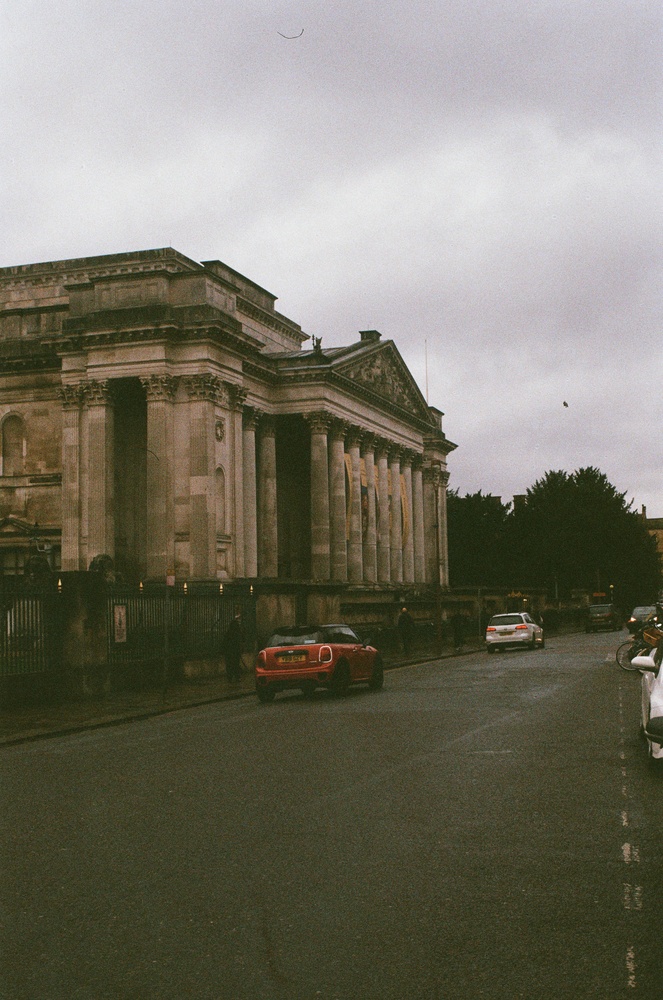
On a wintry, grey-cast day I walked down the ever-familiar Trumpington Street and spotted the equally familiar Fitzwilliam, whilst walking past Browns.
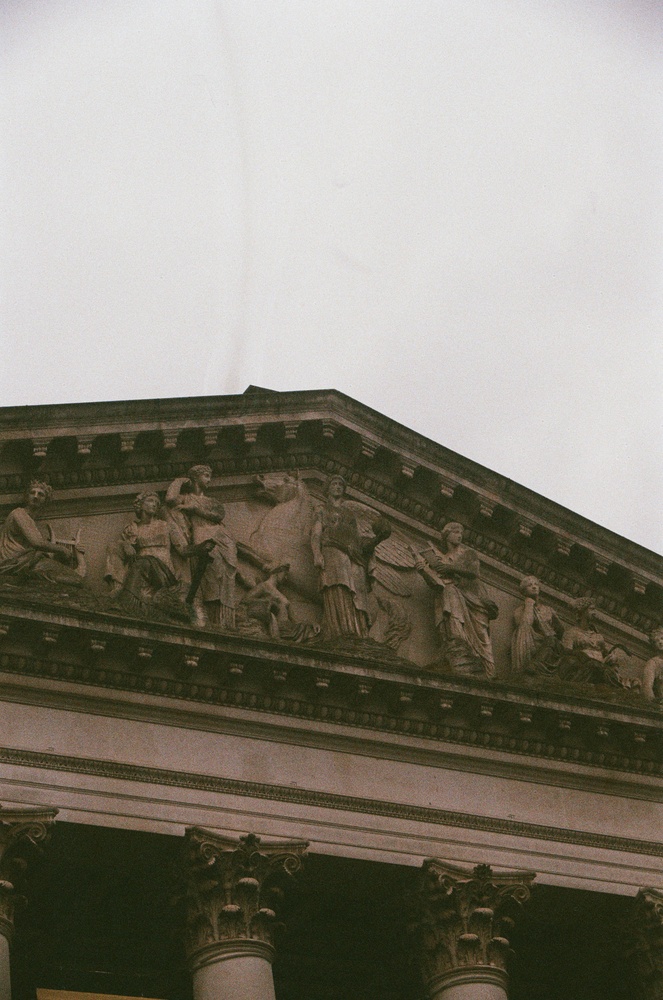
Its neoclassical grandeur, including its iconic frieze, never fail to inspire wonder and excitement within me.
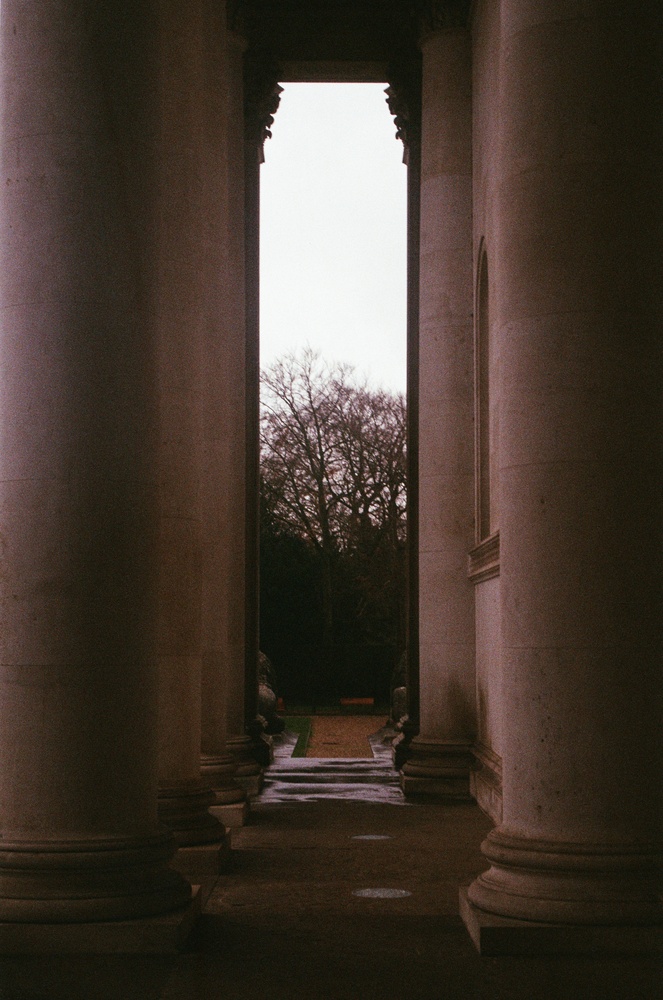
After climbing the steep steps, before passing through the revolving doors, I looked to my left; the wet paving stones glowed in the leaden light and the pillars stood as proud as they always have.
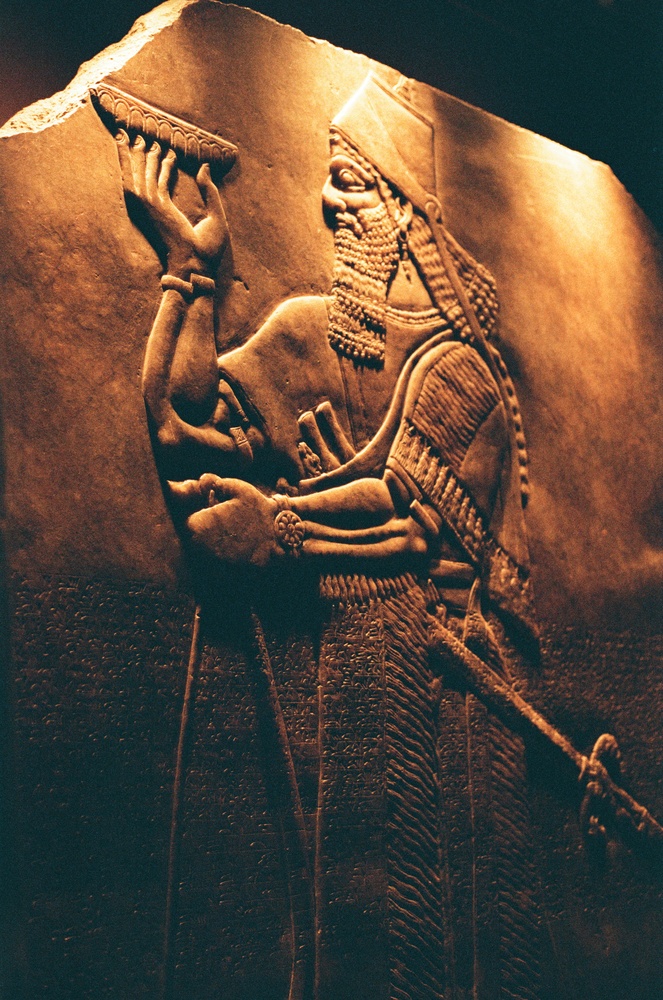
I chose the left descending stairs after passing through the doors and entering the grand lobby; on the way down, into the realm of the ancients, I observed the Assyrian relief illuminated with warm light.
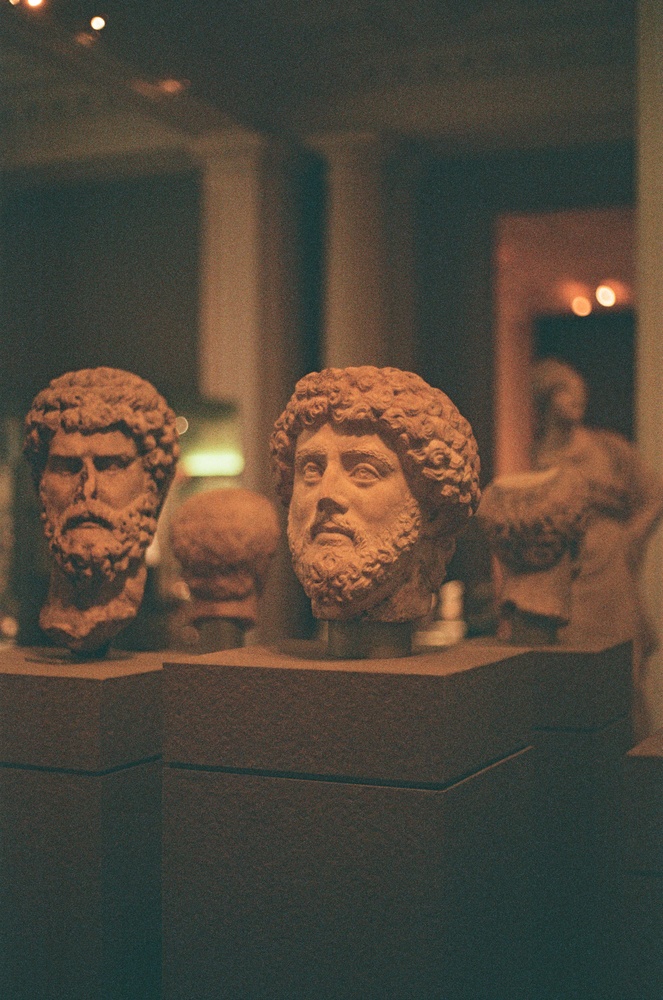
I spent much time in the Classical world, almost forgetting to take photos; here, I decided to capture a portrait of some of the many busts in this section.
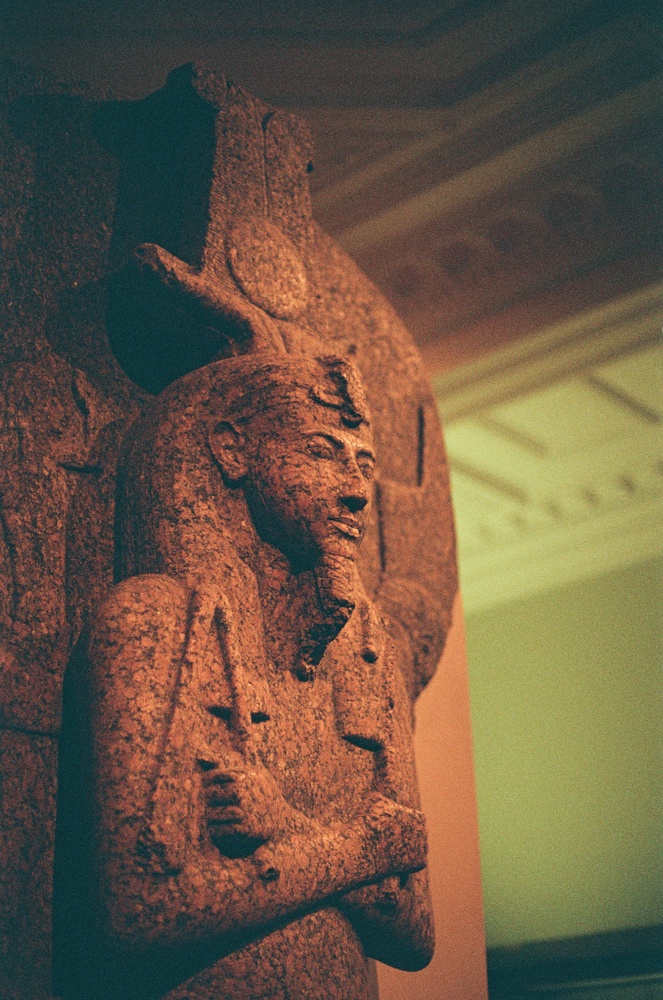
Moving into Ancient Egypt, I was immediately intrigued by this familiar granite Pharaoh, staring off aimlessly down the lengthy corridor before him.
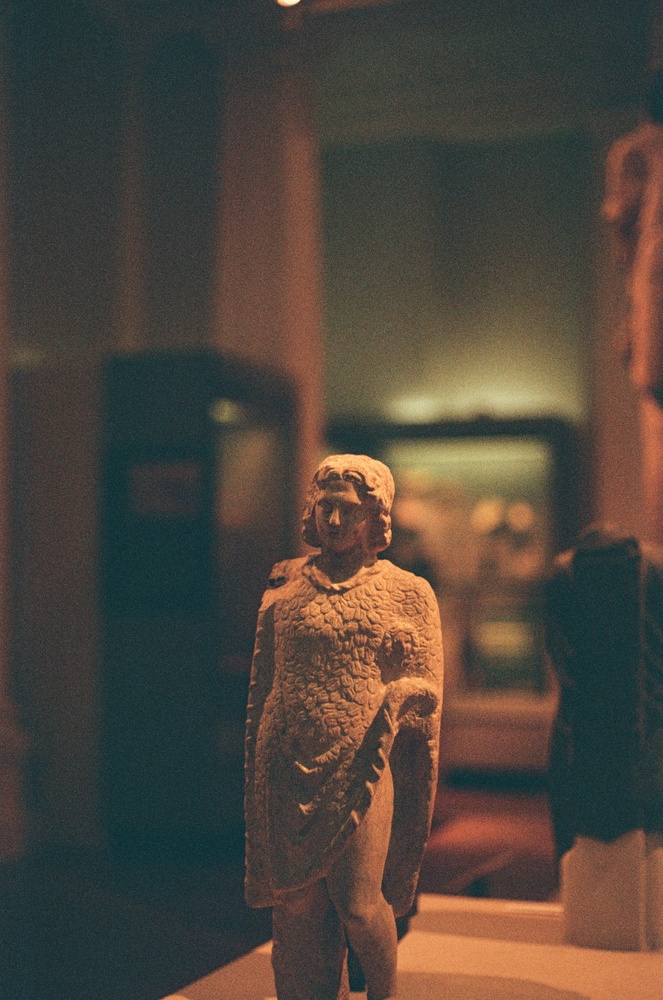
Facing the other way, Alexander the Great poses in a feathered gown.
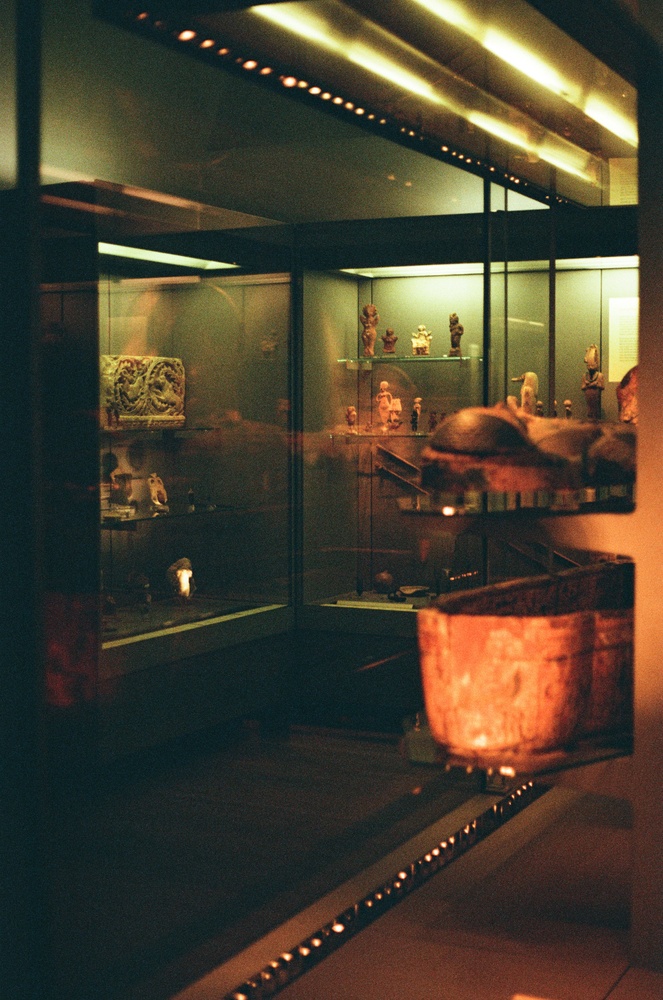
When passing into the next Egyptian gallery, the darker one, I noticed illusions of light manifesting on the thick, protective glass.
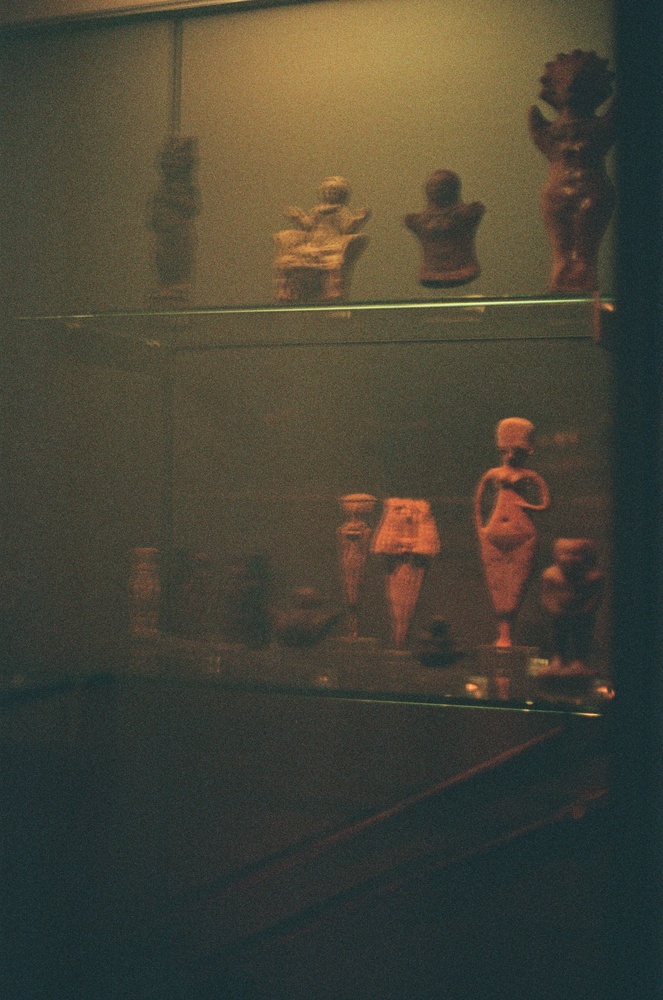
My curiosity became piqued by reflection, refraction and the blurring of lines.
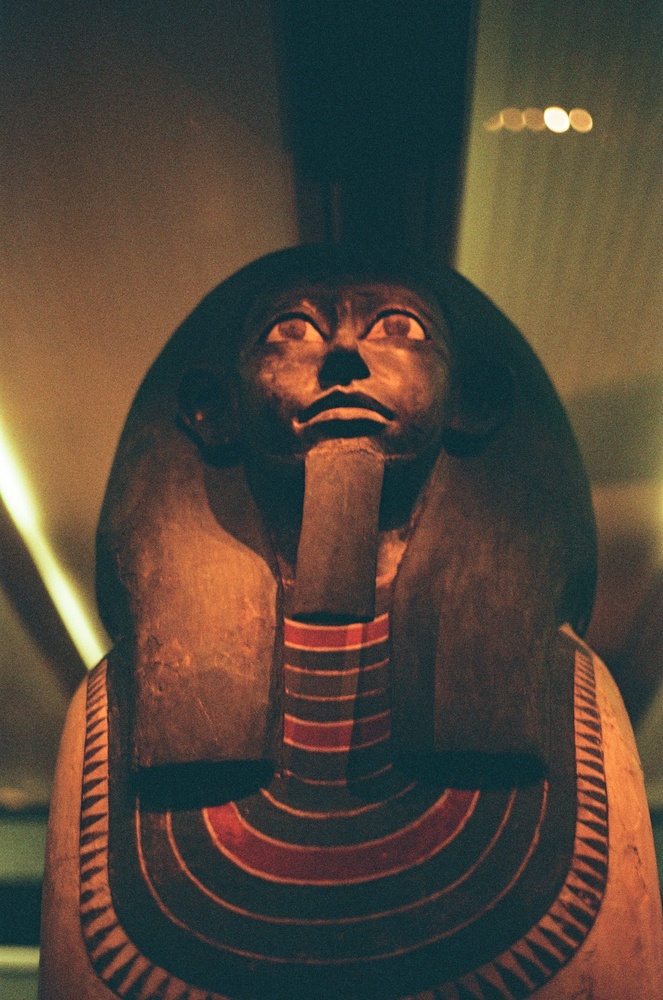
For how many centuries have these beings gazed out into the infinite?
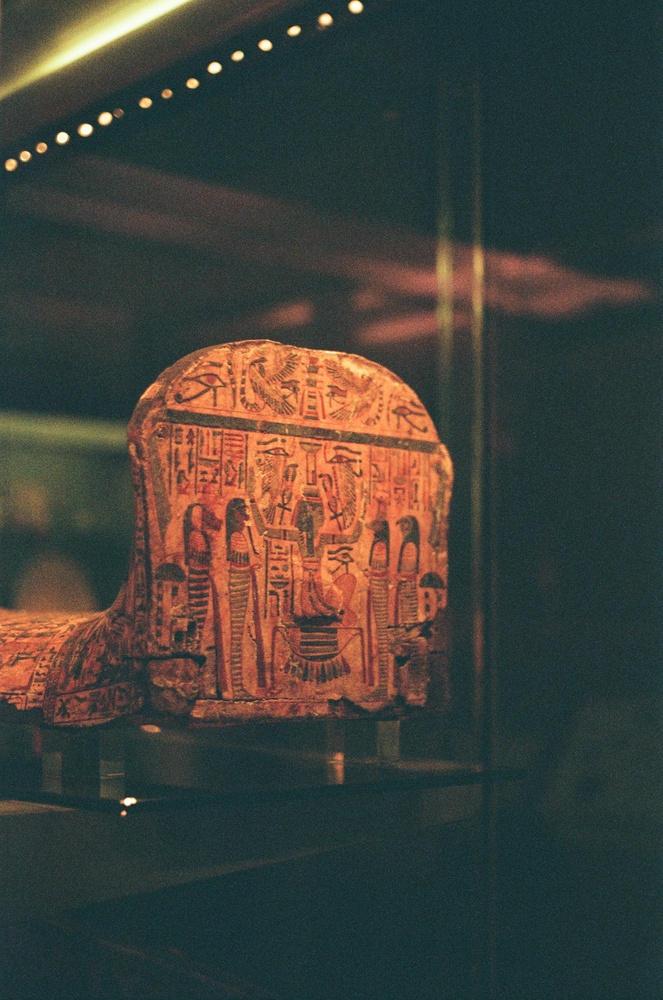
The Old Gods sit there, to be seen by Modern Man, illuminated by carefully placed lights.
By this point, I had chilling goosebumps. I felt the phantom movements of twisting, diffusing lights interact with the spirits of the ancients; all under the cover of protective darkness. It began to be somewhat overwhelming, as if I were practicing a dangerous form of alchemy with my lens. Whilst I am very glad I took these photos, I could not help but feel that I was casting something sacred and hidden onto this roll of film and that, through chemistry and seeing, I was ‘taking something’ from these artifacts. Nonetheless, my thirst for reflection and illusion was still unquenched, and I moved on toward the porcelain; something very close to home for a number of reasons…
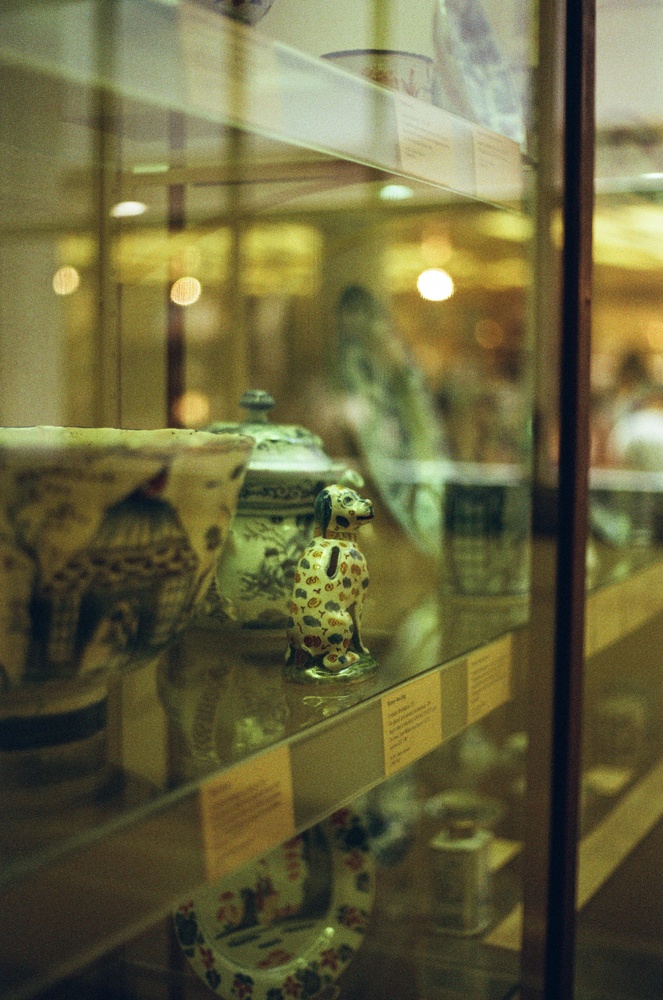
A little Spaniel sits idly amongst a cacophony of light and reflection.
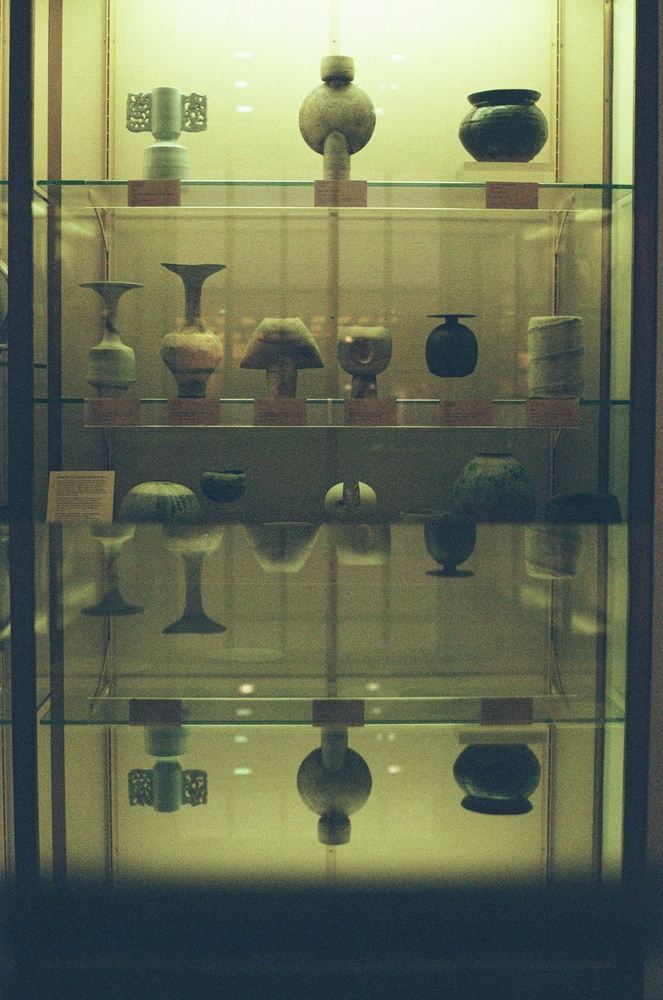
There are two worlds in this museum.
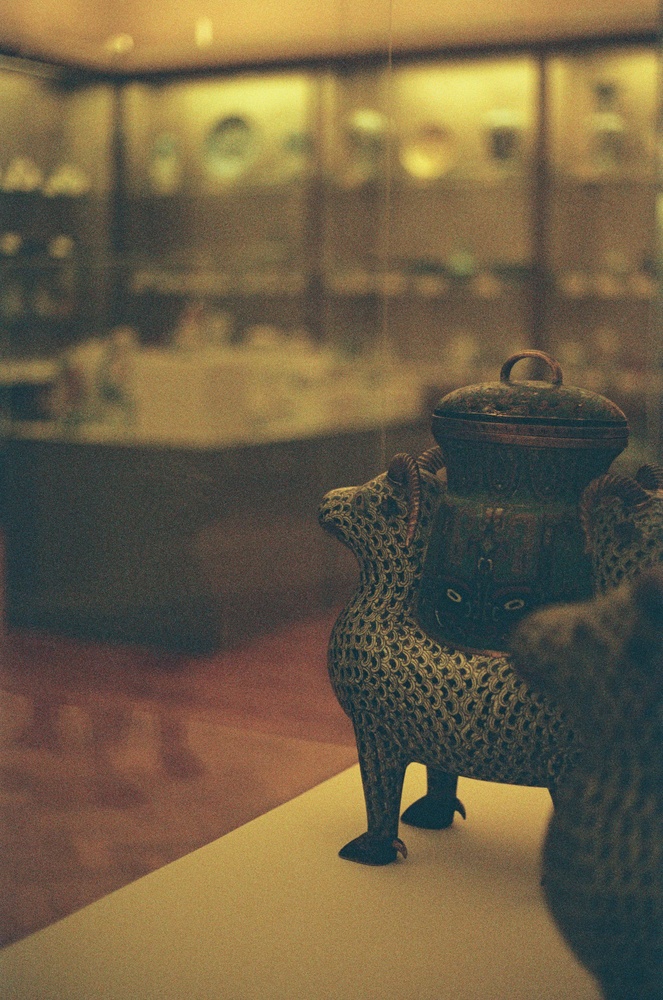
In this other world, a two-headed ram gazes into his shadow.
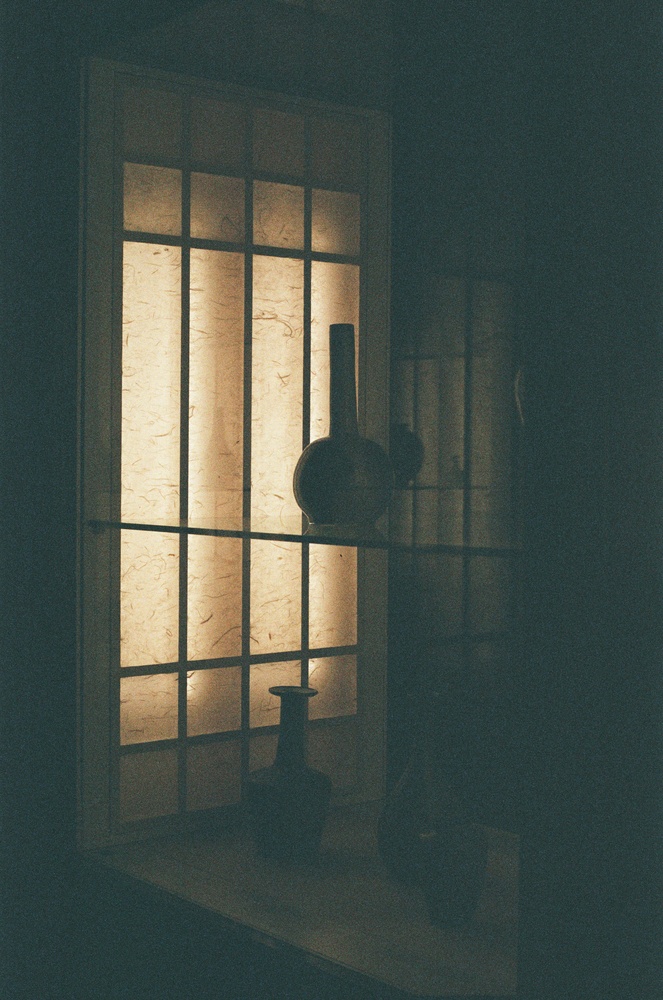
Nearby, there is a fantastic collection of Korean porcelain, next to the cafe.
I decided to pass through the cafe and gift shop, my ‘refuge’ and place where, to this day, I go to if I need to get a lot of work done. On the other side is a most fascinating display of Medieval Europe.
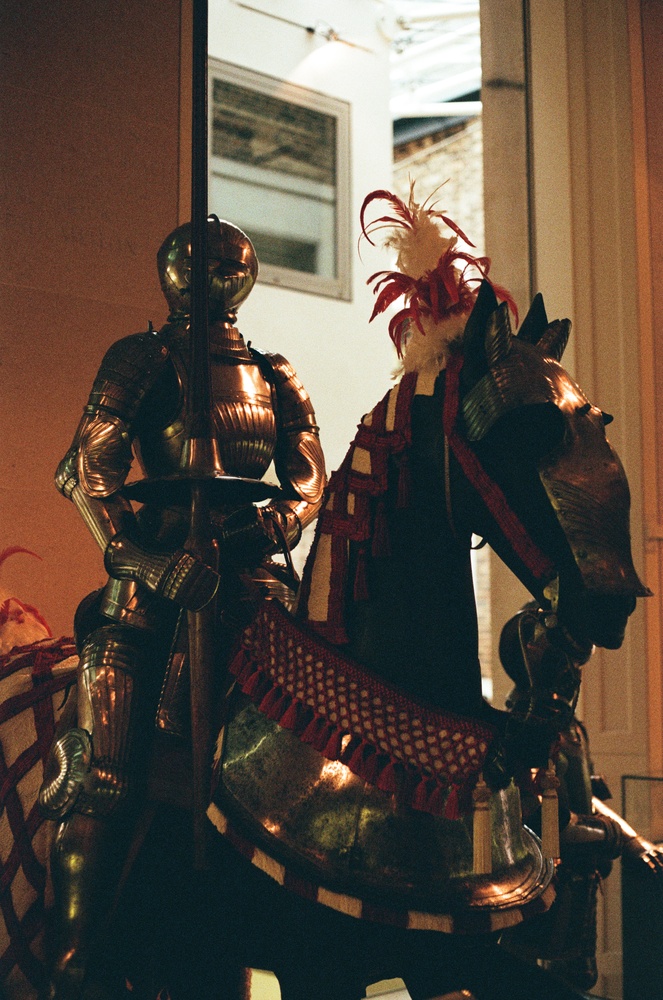
This Medieval Exhibition, at face value, appears to be a bombastic arsenal of archaic weaponry. Children seem to love it, and some very specific adults too. Hollow knights appear, at first, to watch the whole scene in a rather fearsome manner…
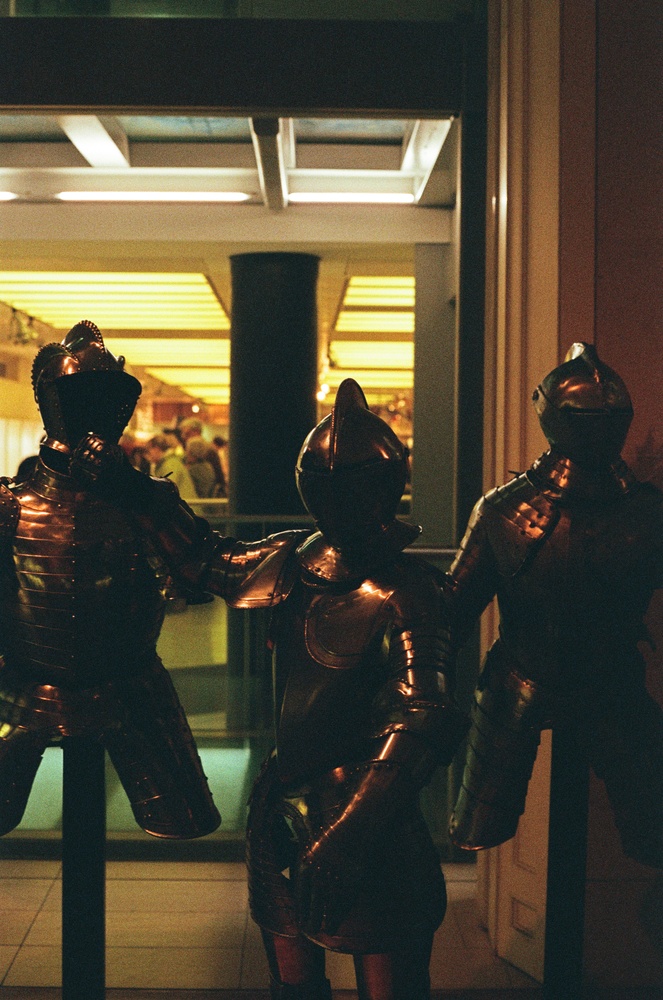
…until one notices their rather comical juxtaposition with the nearby gift shop.
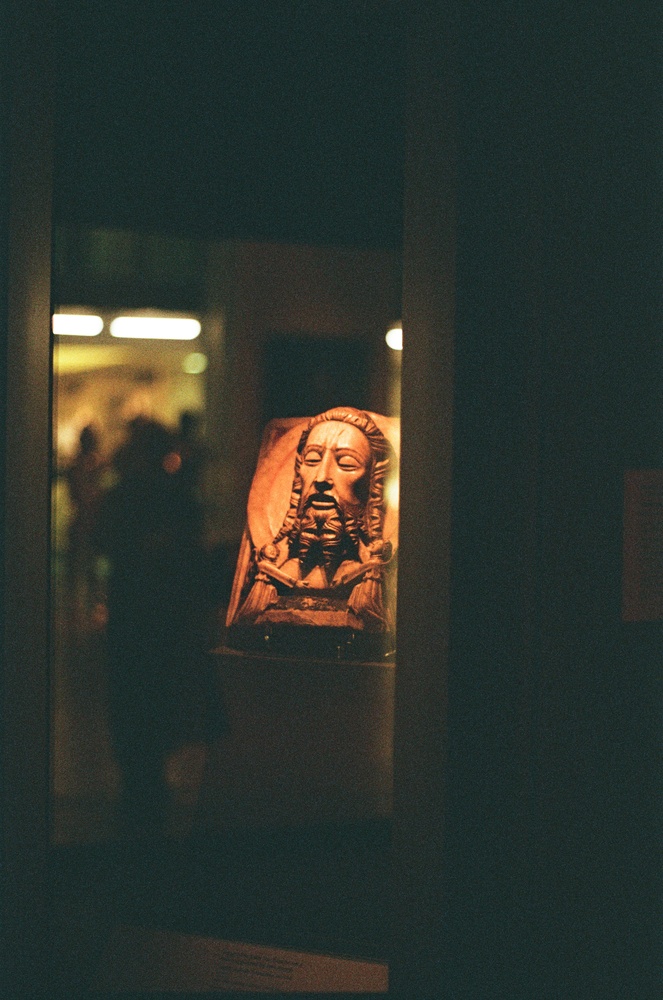
However, under a painting lies a mysterious door. Behind it are unequivocal treasures, and it is one of my favourite spots in the entire museum. As it is seemingly hidden behind a veil of black glass, it is not normally busy and, therefore, is often very quiet and peaceful.
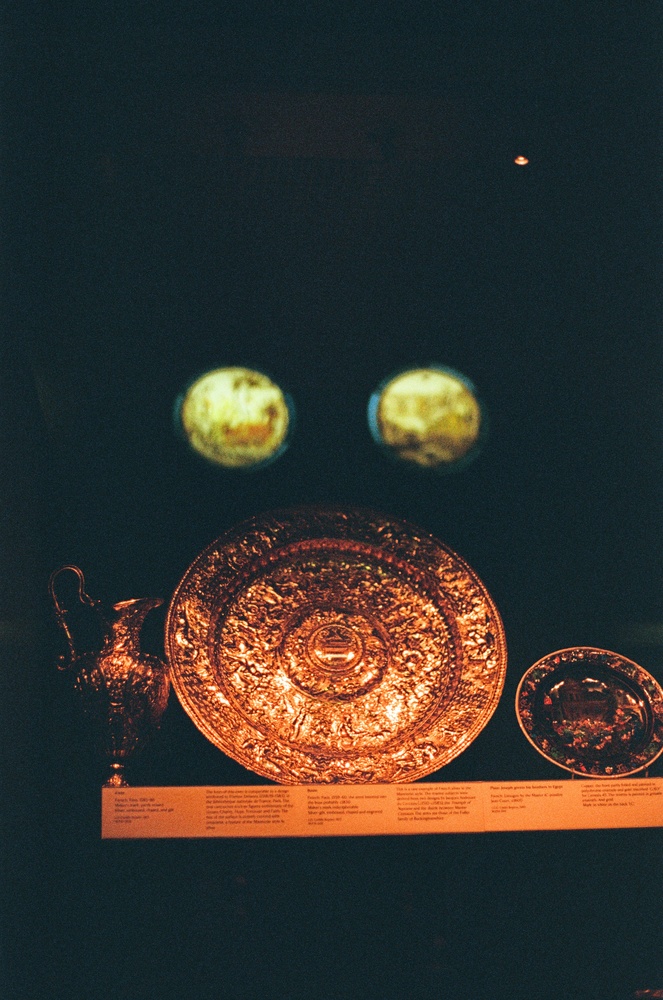
I can assure you, there is a wealth of treasure behind these doors, many of which you will have to see for yourself as, much like in the Classical gallery, photography once again receded into the back of my mind. Quietly singing a Gregorian chant manuscript on display to myself was more of a priority in this moment…
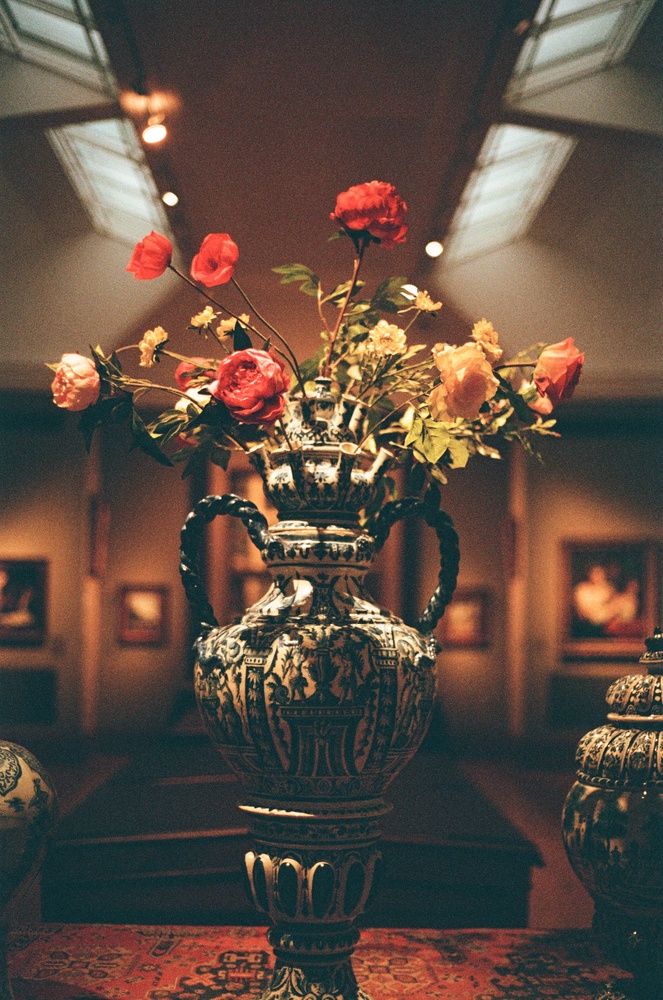
Soon I went upstairs, which is the home of the paintings. I adore analysing the paintings (to the best of my abilities as a musician/photographer), and decided not to photograph them. Instead, I studied more-so the non-painting artworks. The first of which was this stunning vase of peonies.
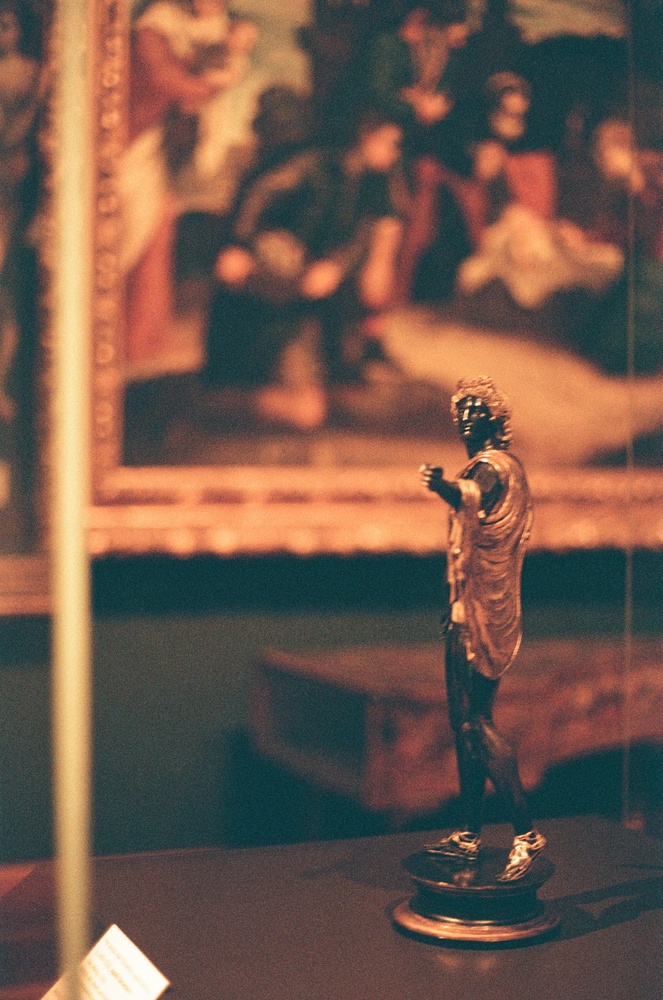
Magnetically drawn to the Renaissance galleries, I spied a seemingly familiar face. Could this be Alexander the Great? If so, a more confrontational representation than the previous one.
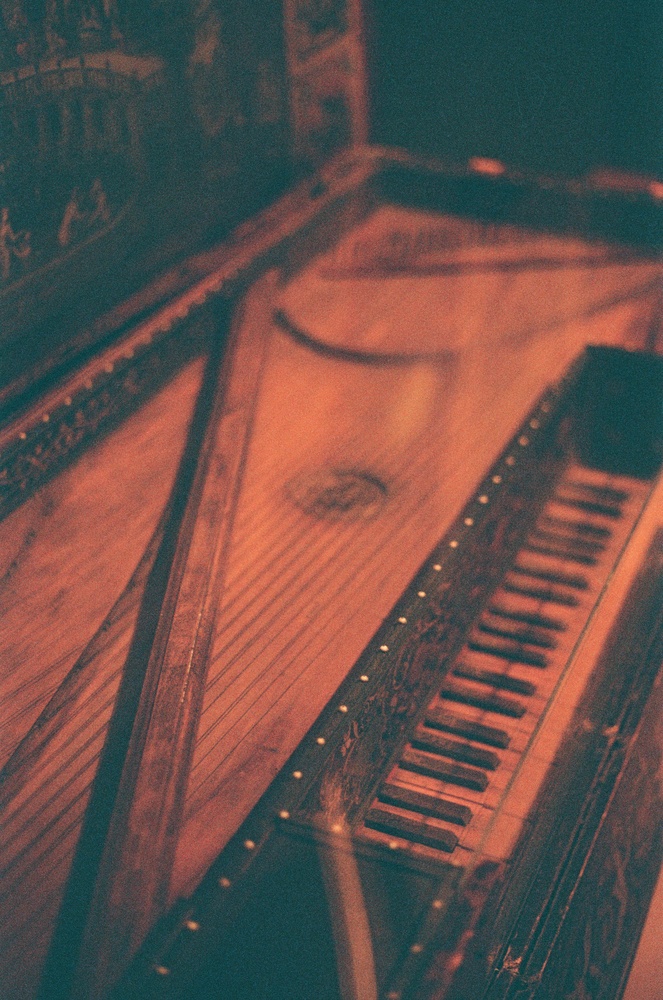
This is one of my favourite pieces of the entire Museum: a 16th century Italian Virginal, seemingly intact and ornately decorated.
To me, this Virginal is a uniquely important symbol, which is simultaneously so easy to pass by if you’re not careful. Not only is it a beautiful, extraordinary instrument, but it carries another significance. Deep in the archival collections of the museum lives an extremely important musical manuscript: The Fitzwilliam Virginal Book. This is a collection of hundreds of Elizabethan Keyboard Works by such eminent composers as Byrd, Tallis, Morley, Bull etc. It is a phenomenal work, and its contents are an incredibly idiosyncratic body of music. I adore this music; I have the two volume Dover edition of the Fitzwilliam Virginal Book transcribed in modern notation, and can play a few pieces (my favourite being ‘Barafostus’ Dreame – Anon). My dream is to be able to play it all, though in particular I would love to one day learn Bull’s Walsingham Variations, which can be found at the beginning of the first volume. Therefore, is it not wonderful to see a fine example of a Virginal sitting proudly amongst the finest of paintings in one of the finest galleries of the Fitzwilliam Museum?
Following a good look at the Virginal and having visualised myself playing it, as I always do, I passed through more galleries, seeking wonders…
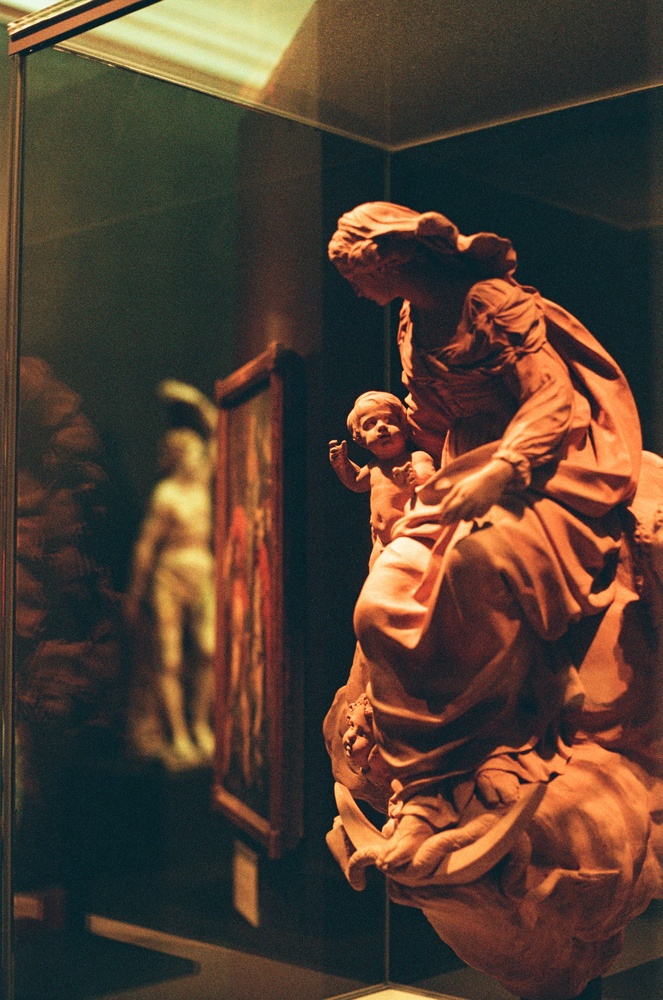
A Madonna & Child
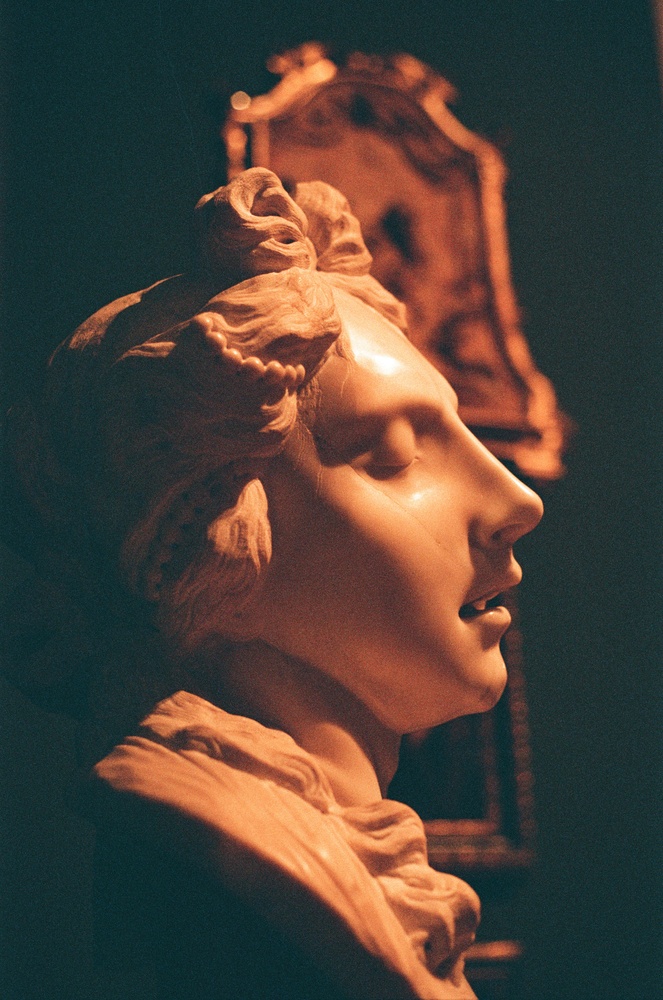
Figure of a melancholic woman
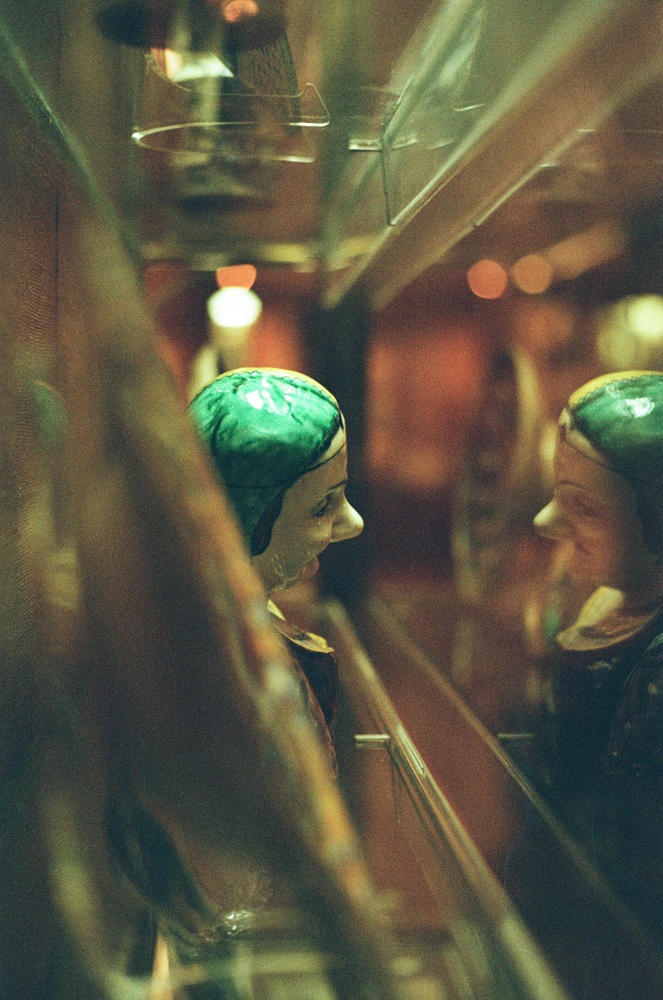
‘Mirror, mirror, on the wall…’
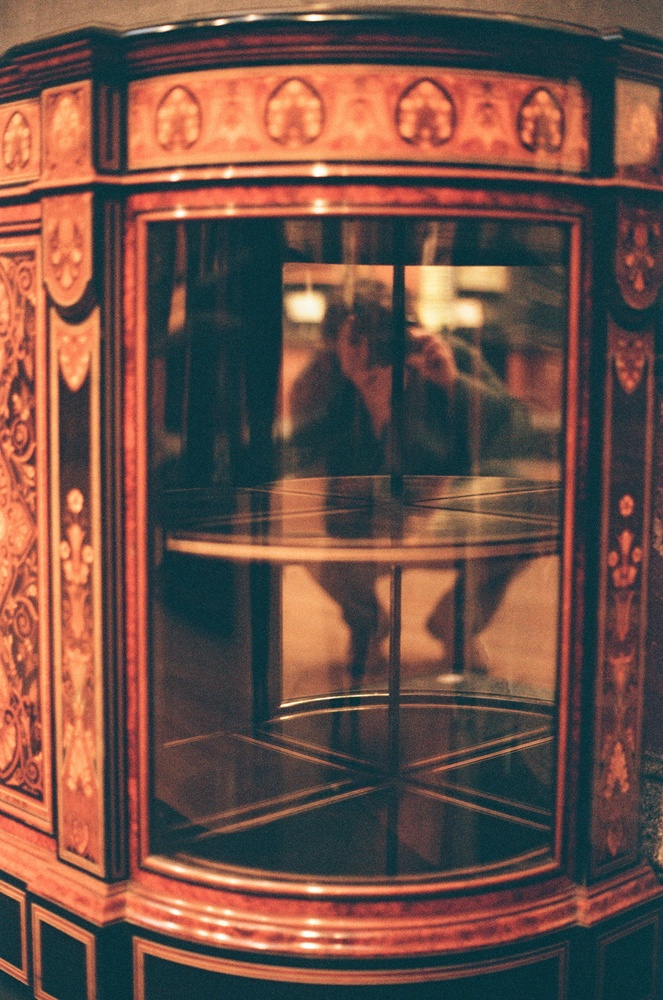
Hello Harry!
This cryptic self portrait was taken in the impressionist gallery. I was soaking in the art around me, transfixed by the totality of beauty and human endeavour all around. However, I had been walking the museum for some hours, and rather needed the bathroom. Luckily, there is one situated near the Classical gallery, in a miniature Classical gallery of its own actually. After speeding down a few flights of stairs and relieving myself, my attention turned finally, before heading to the cafe for a delightful Flat White, on this smaller gallery. I had two photos left in the roll.
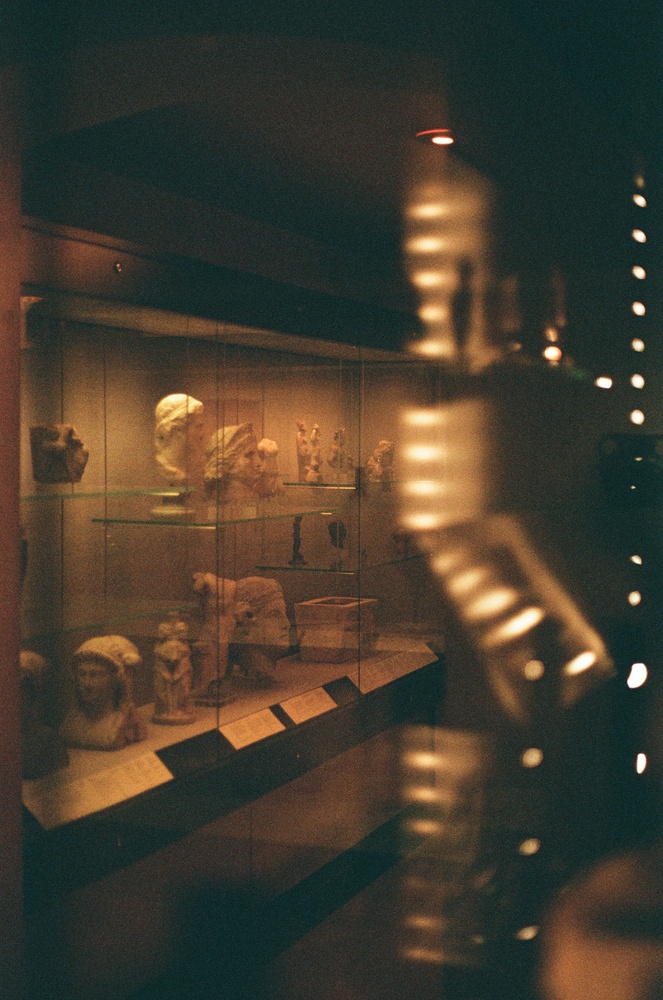
This is likely my favourite image of the photowalk. The lights truly form an optical illusion, making it difficult to assess where the view starts and begins, and what is actually there or not.
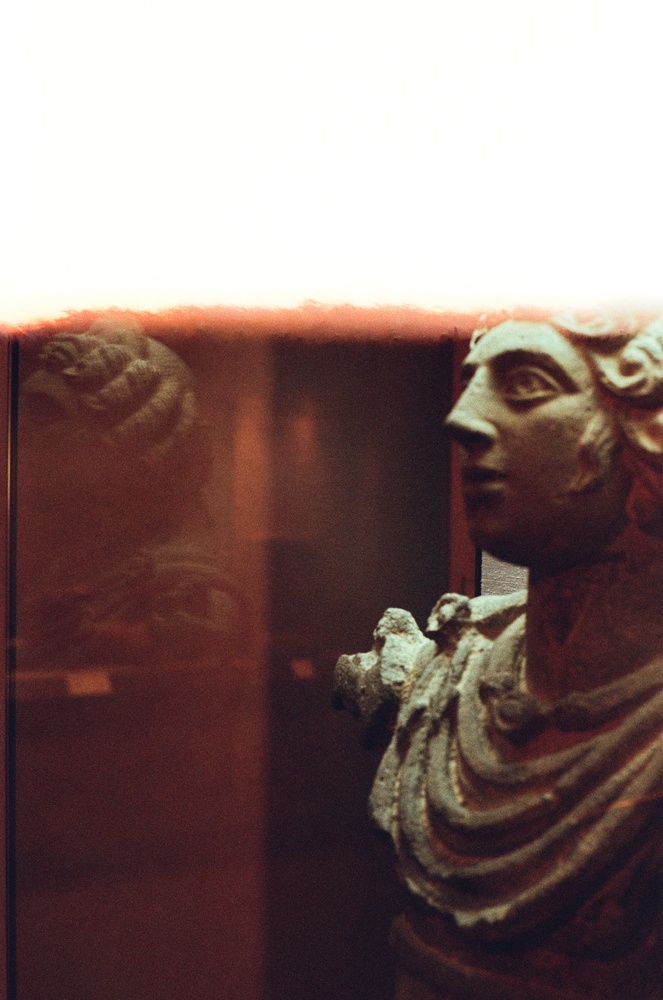
A lightleak gives this woman’s expression, reflected endlessly into the void by the surrounding glass, a different emotion, perhaps.
This little walk around the Fitzwilliam was transformational. To use a rather silly pun, I came out of it seeing this museum and museums in general ‘in a different light’. Especially upon getting these scans back, I was utterly thrilled with my work. Not only does the pushed Ultramax, as I expected, look intensely contrasted and saturated, it also enhances the dissolving of forms taking place on the glass delightfully. My eye was now hungry for more, and a month or two later I descended upon two more Cambridge museums, this time with pushed Cinestill 800t… you can read about that more here: https://harrysphotographythoughtscom.wordpress.com/2026/07/29/photographing-cambridge-museums-a-study-in-light/
 Harry's Photography Thoughts
Leave a comment